
Infection Prevention and Control
This theme aims to improve infection prevention and control (IPC) knowledge, evidence and practice in healthcare settings by coordinating between academia, NHS and industry to deliver high impact, cost-effective solutions. We will support NHS Scotland Assure and ARHAI by advancing targeted research and innovation focused on the most pressing IPC issues experienced in healthcare settings and the built environment.
SHBEN will be recognised as the leading centre of excellence for research, innovation, industry engagement, evidence generation, expertise, and collaboration, advancing IPC through the design, management, and optimisation of the built environment.

Gordon is Professor of Microbiology at University of the West of Scotland, and Director of Research, Innovation and Academic Engagement at NHS Lanarkshire. He is on the executive of the Scottish Universities Life Science Alliance (SULSA). He has worked across NHS, academia and industry for over 25 years in infection prevention and control. He is a Cochrane review author with >£900,000 in income generation, >60 peer-reviewed publications and >900 citations to-date. His work is applied and he has collaborated with multiple companies on the delivery of new infection prevention and control interventions focusing on the spread of pathogens in the built environment and impacts of human behaviour. He has worked with the World Health Organisation in the past and held honorary positions with Public Health Scotland and NHS Ayrshire & Arran.

Ben Parcell is a Clinical Senior Lecturer at the University of Dundee (UoD) and an Honorary Consultant Microbiologist with NHS Tayside, with over a decade of experience in infection prevention and control (IPC). His research integrates pathogen genomics, rapid diagnostics and machine learning with frontline microbiology to develop practical, data-driven solutions that improve how infections are detected, managed and prevented. Alongside this, he serves as Clinical Lead for the UoD’s Population and Digital Health Research Theme, where he leads work to harness data and digital tools to improve the safety, quality and efficiency of healthcare systems.
Healthcare associated infections (HCAI) are a major global health concern impacting some of the most vulnerable people in our communities. We must work together across the triple helix of academia, healthcare and industry to improve our knowledge, increase our surveillance capabilities, and provide evidence-based solutions to reducing the spread of infection. The healthcare-built environment is recognised as playing a major role in the spread of these infections wherever healthcare is delivered.
Key Drivers:
• New and emerging disinfection technologies
• Microbial surveillance
• Active monitoring of healthcare settings for risk of infection
• Managing infection risk in existing and new facilities
• Workforce training and CPD
• Evidence-based design and planning


Strategic Objectives:
- Provide Scientific and Clinical Leadership
Establish expert advisory groups to shape research priorities, guide implementation, and ensure clinical relevance. - Secure Major Research and Innovation Funding
Develop and coordinate ambitious national and international funding applications that leverage the strengths of the network. - Strengthen and Expand Collaborative Networks
Build on existing partnerships while creating new opportunities for interdisciplinary, cross-sector, and international collaboration. - Influence Policy and Professional Practice
Generate evidence and expertise that can be used to inform policy development, clinical guidelines, and best practice across healthcare systems. - Deliver Measurable Improvements in Health Outcomes
Accelerate the translation of research into practice, improving patient outcomes, service delivery, and population health.
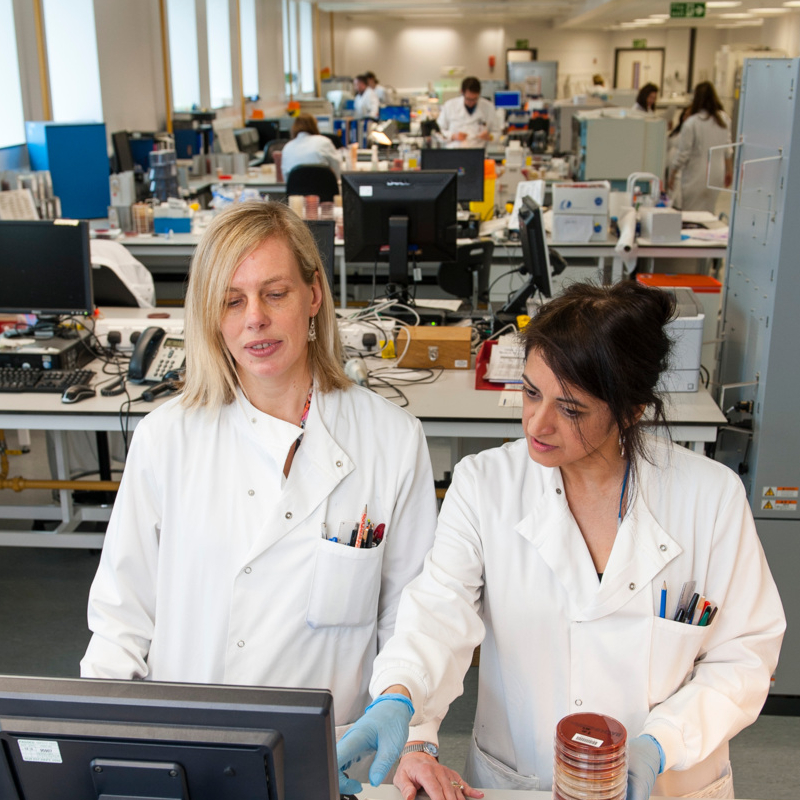
Our network will bring together leading expertise from across the full spectrum of disciplines that influence IPC. This spans clinical practice, decontamination and cleaning, environmental and engineering sciences including ventilation, air quality, and water system design, microbial ecology, surveillance, diagnostics, pathogen genomics, data science, artificial intelligence, behavioural science, policy development, health services research, and antimicrobial resistance. Through a diverse stakeholder community drawn from the triple helix of academia, healthcare and industry, along with policymakers, and public partners, we will create a collaborative platform to drive innovation, inform policy, attract investment, and accelerate the adoption of evidence-based solutions. We invite individuals and organisations from across the UK and internationally to join us in shaping the future of IPC.